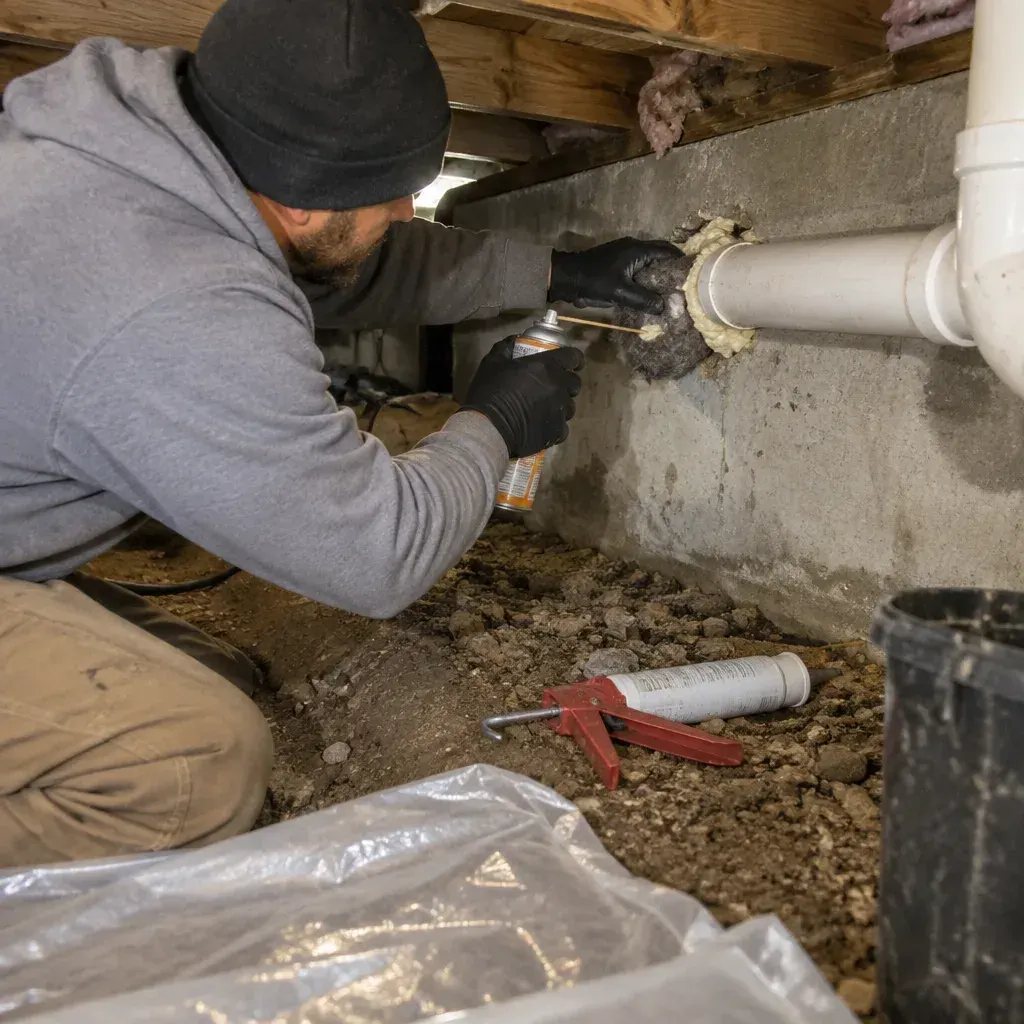
Using Steel Wool in Lee's Summit
Around Downtown Lee's Summit, check openings in order: fit first, then exposure, then whether the plug stays put.
Steel wool can deter gnawing at a small, snug entry gap if the area stays dry and the fibers remain in place. It is a limited barrier, not a trap or a lasting repair by itself. Avoid damp or hot locations, and assess the opening before choosing a material.
Begin With a Seasonal Walkthrough
Start with a visual check from a safe place before handling anything. In Lee's Summit, note signs of activity and mark a suspected opening you can see without climbing or disturbing droppings. A house near Central Park and one elsewhere may have different gaps; the address alone does not tell you which material fits. Record where the opening is, its approximate size, and whether rain or damp air reaches it. If the spot is difficult to inspect safely, leave it for an independent local pro to assess.
Steel wool is a loose bundle of fine metal strands. Its loose strands can snag on rough edges while the material is being fitted into a narrow opening. Steel wool for mice is best considered a barrier at a particular opening, not a complete control plan. In Lee's Summit, first connect the gap to signs you have observed; an inspection can help determine whether it is a likely route or simply a visible flaw.
Next, judge the setting before choosing the material. Steel wool entry holes are a better match when the opening is small enough to hold a snug plug and the spot stays dry and protected from disturbance. A home near Grounds Park should be assessed by its actual conditions, not by the landmark: wind, rain exposure, and access vary from opening to opening. If the fibers cannot stay seated, they leave space around the edges and may provide little barrier.
Confirm the Gap Suits a Plug
Once the location looks suitable, treat the wool as a limited part of rodent exclusion. In Lee's Summit, a snug plug may temporarily obstruct a small route while you arrange a more durable repair. The fibers resist gnawing; they do not close every path into a building, and they do not show whether rodents remain inside. Where activity continues, inspection findings can guide separate control steps and identify whether the opening needs a lasting seal.
Fit matters. Use only enough material to sit securely in a small, sound opening; a loose edge can move and leave a route, while an overpacked wad may be hard to remove or cover cleanly. Near Rotary Park, as anywhere in Lee's Summit, check that the surrounding surface can hold the plug and that you can reach it without unsafe climbing. If the opening is deteriorated or its shape prevents a firm fit, ask an independent local pro about an appropriate repair.
Steel wool is not a durable finish by itself. At a suitable small gap, a compatible sealant or another repair material may help retain the fibers and complete the surface, but compatibility depends on the location and what the surface is made of. In Lee's Summit, avoid improvising where the plug could be pulled out, exposed to regular contact, or hidden from later checks. The material should remain assessable so you can tell whether it has shifted or needs attention.
Review Moisture and Nearby Heat
As the season brings wet weather or cold nights, revisit an accessible plug and look for dampness, rust, or movement. Ordinary steel wool can corrode when it stays wet; weakened fibers may no longer hold their position, and rust can mark nearby surfaces. Lee's Summit shares the region's general seasonal changes, but that does not establish rodent activity at your home. Let the opening's actual exposure and condition guide the check, rather than assuming the season explains what you find.
After rain or a change in weather, inspect from a safe position and note whether the plug remains dry and seated. Do not pull apart material in an area contaminated by droppings; disturbing waste can raise dust. For a home near Railroad Lake, the landmark does not tell you whether a particular gap stays damp, so assess that spot directly. If steel wool is wet, corroded, or displaced, do not rely on it as a dependable barrier; get advice on a suitable replacement.
Decide How the Wool Will Hold
Before placing steel wool, check for heat nearby and stop if the opening is beside a hot surface or equipment. Metal strands conduct heat, and the surrounding materials may also make the location unsuitable. In Lee's Summit, this check belongs before any plug goes in, especially where the gap is difficult to see or reach. Do not push fibers into a space if you cannot confirm what is behind it; have an independent local pro assess the location and repair options.
For a small, dry opening with a stable fit, a compatible sealant or other repair material can help hold the fibers in position. The choice depends on the surface and exposure, so do not assume every product works with steel wool. If the opening is out of reach or you are unsure how to close it, ask an independent local pro to assess the gap. In Lee's Summit, that measured check can help determine whether this limited barrier suits the location or another repair is needed.
Quick Checks Before Filling a Gap
- From a safe spot, note visible activity and the opening's size and location before deciding whether steel wool can fit.
- Check whether the gap stays dry, holds a snug plug, and sits away from heat or regular disturbance.
- After wet weather, look for rust or movement; do not rely on wool that is damp or no longer seated.
- At the start of a seasonal check, confirm the gap is small and steel wool can be packed firmly; a loose plug may leave room for rodents to pass.
- Look for rain or condensation at the opening; steel wool can rust when it stays wet, making a persistently damp spot a poor fit.
- Keep steel wool clear of flames and hot equipment; heat can make it unsafe there, so choose a material suited to that location.
Service Details
How snug should steel wool sit in a small opening?
It can make gnawing through a small opening less attractive when the fibers fit firmly and the location stays dry. Steel wool does not trap rodents or address activity elsewhere in the building, so a plug alone may leave the underlying problem unresolved. The opening and nearby signs need assessment to determine whether exclusion is appropriate and what further control steps, if any, fit the findings.
When should I revisit a steel wool patch?
Look for a small, stable opening in a spot protected from rain, repeated contact, and heat. The fibers need to stay seated; if the gap is crumbling, too wide, or hard to reach safely, this is not a sound place to improvise with a plug. A compatible repair material may help secure wool at a suitable opening, but the surface and conditions determine what can be used.
What can hold steel wool in place long term?
Yes. When ordinary steel wool remains damp, corrosion can weaken the fibers and rust may stain the surrounding surface. Rain exposure or movement can also dislodge a plug. Check an accessible location after wet weather; if the wool is rusty, wet, or loose, do not count on it to block the opening. Avoid disturbing contaminated material while checking.
Need help judging this opening?
If a gap along Main Street is hard to reach, describe its fit and exposure to the pros we connect you with before choosing a plug.
Call (816) 586-5803